
While most people are familiar with black bitumen, there is another variant known as white bitumen, which is commonly used as a waterproofing membrane. This type of bitumen has excellent waterproofing properties and shares some key characteristics with black bitumen, such as high viscosity and strong adhesiveness. Its unique properties make it suitable for a variety of applications, including construction and waterproofing membranes, as well as the manufacture of plastics, paints, pipe insulation, and asphalt. This comprehensive article from BASEKIM provides valuable insights for civil engineers, researchers, and industry professionals interested in the benefits and applications of white bitumen.
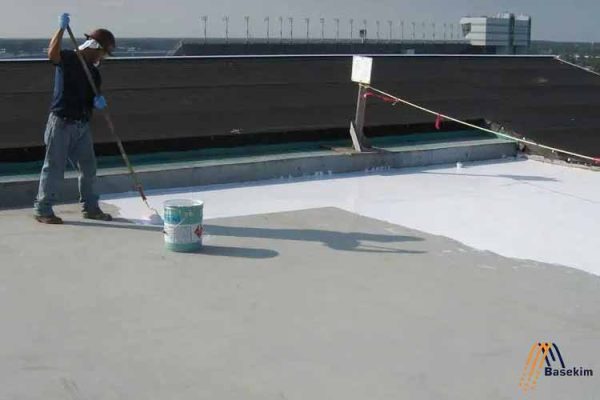
What is white bitumen?
White bitumen, also known as camphor bitumen, albokarbon, or naphthalene, is a solid aromatic hydrocarbon derived from coal. It is valued for its high adhesiveness, tensile strength, and waterproofing properties, making it a useful material in construction, industrial processes, and manufacturing. Because of its superior chemical stability and bonding capabilities, white bitumen is now commonly used alongside products such as Bitumen MC70 in asphalt and waterproofing applications.
History of White Bitumen
The first identification of white bitumen occurred in 1819 during coal distillation experiments. Over the next few decades, prominent scientists such as John Kidd, Michael Faraday, and Emil Erlenmeyer studied its properties and chemical behavior, eventually determining its chemical structure. By the early to mid-nineteenth century, knowledge of white bitumen and its potential applications had spread worldwide, paving the way for its use in construction, waterproofing, and manufacturing processes.
Specifications of White Bitumen
White bitumen’s unique properties are due to a combination of chemical components, additives, and physical characteristics that distinguish it from traditional black bitumen.
Chemical Composition
White bitumen is made from traditional black bitumen. Its distinctive light color is achieved through specialized processing methods. Manufacturers typically use light-colored pigments, such as limestone or titanium dioxide, to turn the bitumen from dark to white while retaining its basic properties, such as viscosity, adhesiveness, and waterproofing ability. It is commonly supplied in grades such as Bitumen 115/15, which ensures consistency in industrial and construction applications.
Additives
White bitumen may contain a variety of additives to improve performance. Polymers are commonly used to increase flexibility and reduce degradation over time. UV stabilizers also help protect the material from the harmful effects of sunlight, increasing its longevity and reliability in outdoor applications.
Physical Properties
White bitumen stands out due to its light color, which reflects sunlight and reduces heat absorption. It also has high adhesiveness, flexibility, and weather resistance, making it an ideal material for construction, waterproofing membranes, pipe insulation, and other industrial applications.
Advantages of White Bitumen
White bitumen provides a number of advantages that make it an appealing option for construction and industrial applications:
- Seamless, lightweight structure: Its uniform composition enables smooth and efficient application.
- Excellent adhesiveness: Provides strong bonding to surfaces for long-lasting performance.
- Waterproof and moisture-resistant: Insoluble in water, it provides excellent protection against dampness and humidity.
- Temperature resistance: Remains stable in extreme heat and cold.
- High tensile strength and elasticity: Combines durability and flexibility, lowering the possibility of cracking.
- Aesthetic appeal: Because of its distinctive light color, it is better suited to specialized applications than traditional black bitumen.
- Single-component material: Ready to use without the need for mixing, which simplifies application.
Disadvantages of White Bitumen
Regardless of its benefits, white bitumen has some limitations:
- Production costs are higher than those of traditional black bitumen.
- Maintenance requirements: Repairs or upkeep may be required over time to ensure performance.
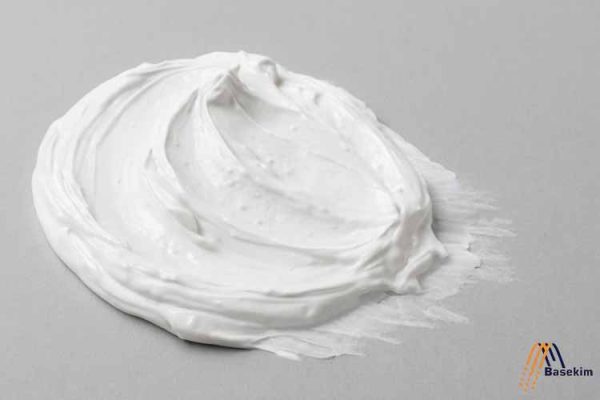
Applications of White Bitumen
Because of its distinct chemical structure and physical properties, white bitumen is a versatile material with numerous industrial and construction applications:
1. Production of White
Waterproofing Membranes
White bitumen is ideal for producing white waterproofing membranes due to its lightweight nature and low light absorption. It is highly water-resistant and easy to install. While it performs well in many environments, it may be less effective in areas with extreme temperature variations.
2. Manufacturing Plastics and Paints
White bitumen’s single-component nature makes it simple to handle in industrial processes, making it useful in the production of plastics and paints. Its chemical stability guarantees consistent quality and performance in these materials.
3. Asphalt Production
White bitumen can be used in asphalt production to create a bright, long-lasting surface that does not require additional paint. This not only improves aesthetics but also saves time and money in road and surface applications.
4. Pipe Insulation
White bitumen is ideal for pipe insulation. It can be applied without mixing, resists moisture, and absorbs little sunlight. Its colorability and chemical stability make it a versatile material for industrial and construction piping systems.
5. Pest Control and Disinfection
White bitumen is soluble in methanol, making it suitable for disinfection and pest control. It is commonly used to protect carpets from moth damage and can also act as a deterrent to other insects.
6. Tree Insulation
Gardeners use white bitumen to insulate trees because it repels insects and provides protection. It protects them from insect damage, moisture, and direct sunlight, ensuring bark integrity and overall tree health.
7. Waterproofing Insulation
White bitumen’s high adhesiveness and flexibility enable it to form a strong barrier to water penetration. This makes it ideal for waterproofing foundations, tunnels, basements, and other structures that require consistent moisture protection.
Methods of Using White Bitumen
The application of white bitumen varies depending on its intended use, with techniques tailored for construction, industrial, and agricultural applications.
1. Asphalt Concrete Production
White bitumen is mixed with gilsonite, bituminous rocks, sand, and gravel to make asphalt concrete. This mixture is then heated and compacted to form white asphalt concrete that can be applied to surfaces with standard paving equipment. This method creates a long-lasting, bright, and visually appealing surface.
2. Spraying
To waterproof roofs or other surfaces, white bitumen is applied in layers. Workers must first clean and prepare the surface before applying multiple layers of white bitumen using a roller, brush, or spray equipment.
In agriculture, a diluted white bitumen emulsion can be sprayed to control dust or stabilize soil, thus improving environmental conditions on farms and construction sites.
Maintenance and Lifespan of White Bitumen
White bitumen must be maintained on a regular basis to ensure its long-term performance. Cleaning surfaces to remove dirt and debris and promptly repairing any damage are critical to extending their life. Extreme weather, heavy traffic, and improper installation all have the potential to reduce durability. However, using high-quality materials and professional application methods can significantly increase longevity.
Environmental Impact of White Bitumen
While white bitumen is extremely useful, environmental concerns are critical. Eco-friendly alternatives are being developed to minimize potential harm while maintaining performance. Additionally, recycling and proper disposal of white bitumen help to reduce environmental impact. Recycling allows materials to be reused in new applications, whereas proper disposal avoids contamination and ensures responsible waste management.
Conclusion
To summarize, white bitumen is a versatile and highly durable material with distinct chemical and physical properties that make it suitable for a wide range of applications, including waterproofing membranes and asphalt production, pipe and tree insulation, pest control, and more. Its superior adhesiveness, flexibility, and resistance to moisture and temperature changes make it a clear choice over traditional bitumen, though proper application and maintenance are required for long-term performance.
BASEKIM provides a comprehensive range of products for professionals and industries seeking high-quality bitumen and membrane solutions, including all grades of oxidized bitumen (115/15, 150/5, 110/30, 85/25, 90/15, 95/25, 75/25, 90/40), as well as solvent- and water-based waterproofing membranes, APP, SBS, foil, granule, and rubberized insulation materials, ensuring dependable solutions for all construction and industrial requirements.